



Voting Resources
sustainable workforce
November 25th, 2014


Sweeping education reforms passed by the Texas Legislature in 2013 will be a great help to business leaders in Houston as they embark on an unprecedented push to promote “middle skills” jobs. Those are well-paying jobs that...
October 8th, 2014


On Oct. 1, a new round of foreign H-1B guest workers will began to work in the United States. H-1B visas are for skilled workers in specialty occupations, mainly in engineering and computer occupations. H-1B visas are an...
July 13th, 2014


On Thursday the House passed H.R. 803, the Workforce Innovation and Opportunity Act, which will reform our nation’s current workforce training system in order to make it more effective, modern, and accountable. At a time in...
May 13th, 2014
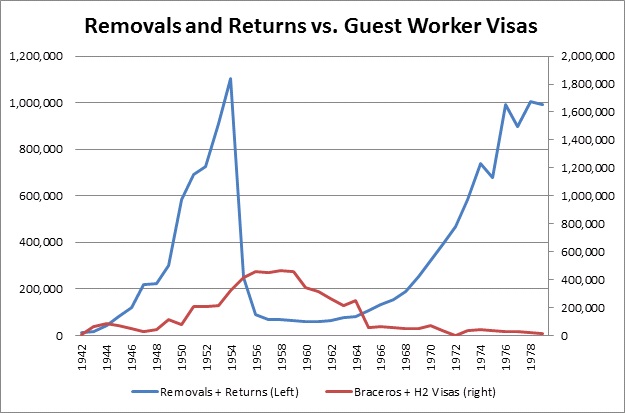

The following was written by Alex Nowrasteh of the Cato Institute:There is a trade off between the number of lower skilled guest worker visas and the number of unauthorized immigrants. More lower skilled guest workers means...
February 13th, 2014


During the 2013 Texas legislative session, a major education reform was passed to help broaden the educational opportunities of students to be able to compete not only in colleges but in the workplace as well.The bill set...
January 30th, 2014

President Barack Obama promised Hispanics that immigration reform would be a top priority if he were elected president in 2008. He was elected president, and then he did nothing except ramp up deportations. Even in 2009,...
January 20th, 2014

Sid Miller is a solid, conservative, pro-life and pro-Second Amendment Republican. During his time serving the people of Texas as a state representative, Miller was the House author of the Texas Sonogram Bill. He served as...
January 7th, 2014
Immigration and the Texas Economy - We Must Fix Immigration Laws to Sustain Economic Growth in Texas

Much of the growth of the American and Texas economies, and even innovation for that matter, comes for the immigrants who find their way here to make a better life for themselves and their families. The net positive is that...
December 12th, 2013

When our leaders set lofty goals it creates a pathway to achievement. Over fifty-two years ago, President Kennedy set a goal for our nation of sending a man to the moon and returning him home safely by the end of that decade...
August 28th, 2013


Last week, the group, Immigration Works USA, hosted a panel discussion moderated by U.S. Congressman Ted Poe called Immigration Reform: What Houston Employers Need. The event was held at Pappadeaux with opening...
October 15th, 2014
Guest Worker Visas and the Components to Make Them Politically, Economically, and Legally Successful

Expanding and liberalizing America’s lawful immigration system is the easiest way to boost economic growth and is also the key to stopping unlawful immigration. After a century of reforms that enhanced and centralized...
July 14th, 2014


The concerns expressed by these billionaires are shared by countless men and women I meet everyday trying to run small businesses. They cannot find workers. They are afraid of losing the tenured and trained employees they...
July 10th, 2014

I am extremely pleased with the bi-partisan passage of H.R. 803, the Workforce Innovation and Opportunity Act, which will reform and streamline our nation’s current workforce training system in order to make it more...
March 20th, 2014
While some believe education reforms passed by the Texas Legislature last year offer the right alternatives for students who may want to go to college or immediately enter a career, there are others who will push to make...
January 31st, 2014
In Texas political races all over the state, candidates are being grilled about what they think of sweeping education reforms passed by the legislature last year. While there is pretty much universal agreement that the big...
January 23rd, 2014
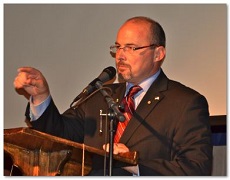
Recently, California State Assemblyman (equivalent of a Texas State House Legislator), Tim Donnelly spoke on the floor about our broken immigration system and the need for immigration reform and stronger border security....
January 9th, 2014

In what will hopefully be the first in a series of events like it across Texas, business leaders and educators from the Houston area gathered to talk about the best ways they can work together to put kids on track for the...
January 2nd, 2014

As the Texas Republican Primary now kicks into full gear in the sprint to the March 4th Primary Election, Texas Attorney General Candidate, Barry Smitherman (currently Chairman of the Texas Railroad Commission), sat down...
October 30th, 2013
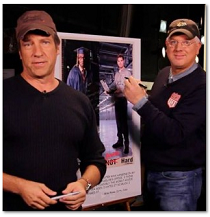
There is a profound truth that often gets ignored in the haze of political warfare. Sometime, in order to actually get something done, you have to work WITH the other side! Wow, what a concept! It is easy to just hate the...
August 8th, 2013

As former chairman of the Texas Workforce Commissioner, Tom Pauken is no stranger to the pages of TexasGOPVote. Pauken has been a news contributor for this website nearly from its inception in 2009. Now Pauken has taken on a...